The IRS is currently suffering a severe backlog in processing returns from 2021 for the 2020 tax year. As of Dec. 31, there were still more than 6 million unprocessed individual returns with notices and pending refunds. There are a few things every taxpayer should know that can help them navigate any delays in filing or speeding up the process to make filing this year as smooth as possible.
Pass on the Paper
Nothing speeds up the process like electronic filing. Despite the uptick in electronic filing over recent years, the agency is still buried in paper, receiving almost 17 million paper filings last year.
When filing electronically, there’s a good chance you’ll see your refund within 21 days of acceptance. Just make sure you keep track of your submission and that it is accepted and not bounced back.
Validate Your Return Properly
To file electronically and have your return accepted, you’ll need to validate your return with last year’s adjusted gross income. As simple as this sounds, it’s not as easy as looking at last year’s return if your 2020 filing is still pending. In this case, you’ll need to enter $0 for your 2020 AGI or the agency may reject the filing.
Reconcile Your Child Tax Credits and Stimulus Payments
Returns with innocuous errors are one of the biggest causes of notices and held-up returns. Simple mistakes or the careless compilation of a return can cause matching errors and throw a wrench in the processing of a return, with two issues being prone for the average taxpayer: the advance child tax credits and stimulus payments.
Taxpayers should pay extra attention to and double-check these areas of their returns to avoid delays. While taxpayers may receive a Letter 6419 for child tax credits or 6475 for stimulus checks, it’s still a good idea to verify your payments for these two areas online for the best accuracy.
Another snafu that can arise is for married couples filing jointly. You may each receive separate letters showing only half of your total payments. Make sure you verify and report the total amount in these cases. Remember that avoiding math errors can save a lot of time and headaches later.
New Questions on Page #1 – “Virtual Currency”
More and more taxpayers are also owners of some type of cryptocurrency. If you are one of them, then this year, for the first time, you’ll need to answer a new “stand-out” question on page one of your tax return.
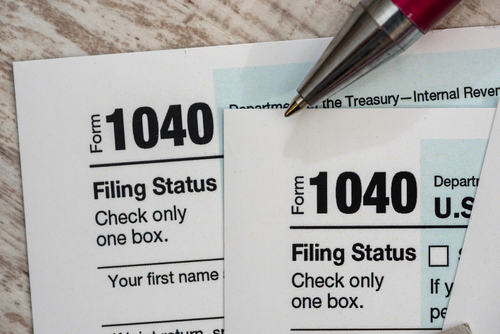
There is now a simple yes or no question on the front of every Form 1040, asking if you received, sold, or exchanged any cryptocurrency.
Your answer should be “Yes” if you staked, sold, exchanged, mined, or used crypto to purchase goods or services in 2021. If you only purchased cryptocurrencies and held them, then you should make sure you check “No.”
A “Yes” here is a flag to the IRS and they’ll be looking for you to report income from staking and mining or gains or losses on Schedule D. It can also fast track your return to the manual review pile, adding further delay to processing your return. But remember, that’s no reason to not answer truthfully.
Taxing Saturdays
Reaching the IRS via phone is notoriously difficult (which is why having a CPA prepare your taxes can be more than worth it). Average wait times are exceeding 23 minutes. In response, the IRS is adding monthly walk-in hours on select Saturdays at certain Taxpayer Assistance Centers, starting on Feb. 12.
To access this service, you’ll need government-issued photo identification, a Social Security card or your Individual Taxpayer Identification Number, and any IRS letters or notices. If you are filing on your own, this can help clear up issues; but remember, it’s best to use a paid preparer. They can handle both administrative issues and offer their expertise.
Conclusion
The IRS has a huge backlog of returns with issues, often resulting from simple avoidable problems such as “math errors” or paper filing. Do yourself a favor and follow the advice in this article to make this year less “taxing” on everyone.
Carion Doty LLP
What Every Taxpayer Needs to Know This Season
April 1, 2022 · Blog, Tax and Financial News
The IRS is currently suffering a severe backlog in processing returns from 2021 for the 2020 tax year. As of Dec. 31, there were still more than 6 million unprocessed individual returns with notices and pending refunds. There are a few things every taxpayer should know that can help them navigate any delays in filing or speeding up the process to make filing this year as smooth as possible.
Pass on the Paper
Nothing speeds up the process like electronic filing. Despite the uptick in electronic filing over recent years, the agency is still buried in paper, receiving almost 17 million paper filings last year.
When filing electronically, there’s a good chance you’ll see your refund within 21 days of acceptance. Just make sure you keep track of your submission and that it is accepted and not bounced back.
Validate Your Return Properly
To file electronically and have your return accepted, you’ll need to validate your return with last year’s adjusted gross income. As simple as this sounds, it’s not as easy as looking at last year’s return if your 2020 filing is still pending. In this case, you’ll need to enter $0 for your 2020 AGI or the agency may reject the filing.
Reconcile Your Child Tax Credits and Stimulus Payments
Returns with innocuous errors are one of the biggest causes of notices and held-up returns. Simple mistakes or the careless compilation of a return can cause matching errors and throw a wrench in the processing of a return, with two issues being prone for the average taxpayer: the advance child tax credits and stimulus payments.
Taxpayers should pay extra attention to and double-check these areas of their returns to avoid delays. While taxpayers may receive a Letter 6419 for child tax credits or 6475 for stimulus checks, it’s still a good idea to verify your payments for these two areas online for the best accuracy.
Another snafu that can arise is for married couples filing jointly. You may each receive separate letters showing only half of your total payments. Make sure you verify and report the total amount in these cases. Remember that avoiding math errors can save a lot of time and headaches later.
New Questions on Page #1 – “Virtual Currency”
More and more taxpayers are also owners of some type of cryptocurrency. If you are one of them, then this year, for the first time, you’ll need to answer a new “stand-out” question on page one of your tax return.
There is now a simple yes or no question on the front of every Form 1040, asking if you received, sold, or exchanged any cryptocurrency.
Your answer should be “Yes” if you staked, sold, exchanged, mined, or used crypto to purchase goods or services in 2021. If you only purchased cryptocurrencies and held them, then you should make sure you check “No.”
A “Yes” here is a flag to the IRS and they’ll be looking for you to report income from staking and mining or gains or losses on Schedule D. It can also fast track your return to the manual review pile, adding further delay to processing your return. But remember, that’s no reason to not answer truthfully.
Taxing Saturdays
Reaching the IRS via phone is notoriously difficult (which is why having a CPA prepare your taxes can be more than worth it). Average wait times are exceeding 23 minutes. In response, the IRS is adding monthly walk-in hours on select Saturdays at certain Taxpayer Assistance Centers, starting on Feb. 12.
To access this service, you’ll need government-issued photo identification, a Social Security card or your Individual Taxpayer Identification Number, and any IRS letters or notices. If you are filing on your own, this can help clear up issues; but remember, it’s best to use a paid preparer. They can handle both administrative issues and offer their expertise.
Conclusion
The IRS has a huge backlog of returns with issues, often resulting from simple avoidable problems such as “math errors” or paper filing. Do yourself a favor and follow the advice in this article to make this year less “taxing” on everyone.
Disclaimer
These articles provide general information on tax, accounting, and financial topics for small businesses and individuals. They are educational in nature and are not specific legal, accounting, financial, tax, or other professional advice, and should not be relied upon as such. This content was prepared by Service2Client and may have been reviewed or edited by the website owner for accuracy and compliance. Look for a trust mark below for verification details. No representation is made that any approach described will achieve a particular result, and no regulatory or professional body has reviewed or endorsed this content. Because each situation is different, readers should consult a qualified professional about their specific circumstances before acting. Images accompanying these articles are protected by copyright and may not be copied or reused.
To provide the best experiences, we use technologies like cookies to store and/or access device information. Consenting to these technologies will allow us to process data such as browsing behavior or unique IDs on this site. Not consenting or withdrawing consent, may adversely affect certain features and functions.
Functional
Always active
The technical storage or access is strictly necessary for the legitimate purpose of enabling the use of a specific service explicitly requested by the subscriber or user, or for the sole purpose of carrying out the transmission of a communication over an electronic communications network.
Preferences
The technical storage or access is necessary for the legitimate purpose of storing preferences that are not requested by the subscriber or user.
Statistics
The technical storage or access that is used exclusively for statistical purposes.The technical storage or access that is used exclusively for anonymous statistical purposes. Without a subpoena, voluntary compliance on the part of your Internet Service Provider, or additional records from a third party, information stored or retrieved for this purpose alone cannot usually be used to identify you.
Marketing
The technical storage or access is required to create user profiles to send advertising, or to track the user on a website or across several websites for similar marketing purposes.
 The IRS is currently suffering a severe backlog in processing returns from 2021 for the 2020 tax year. As of Dec. 31, there were still more than 6 million unprocessed individual returns with notices and pending refunds. There are a few things every taxpayer should know that can help them navigate any delays in filing or speeding up the process to make filing this year as smooth as possible.

