The recent hurricane Ian impacted much of the southeast United States. As a result, it is good to know the general tax rules related to disaster victims. Below, we look at several tax topics for disaster area victims.
1. Tax Returns and Filings
Q: I am a disaster area victim and needed to move from my home. I might not be back for a long time or even at all. Which address should I use on my tax return?
A: A taxpayer should always use their current address in filing a tax return. In the situation where you move after filing your return, you need to update your address with the IRS. You can do this either by filing form 8822 or calling the IRS Disaster Hotline at 866-562-5227.
Q: I filed an extension for my form 1040, giving me until Oct. 15 to file. Are there any further extensions available?
A: Taxpayers who already filed for an extension until Oct. 15 and live in a federally declared disaster area of the recent hurricanes receive an automatic extension due date of Dec. 31.
2. Payments
Q: I have a balance due on my 2021 tax return and am currently accruing interest on it. Is there any relief for disaster victims on interest charges?
A: No, the IRS is not giving any forbearance or cancellation of interest on tax balance liabilities. The IRS is, however, willing to waive late payment penalties when the taxpayer can prove the reason they are late is caused by issues related to the disaster.
3. Property and Casualty Loss
Q: During a recent disaster, we lost electricity, and all the food in my refrigerator and freezers spoiled, and I had to throw it away. My homeowners’ insurance reimbursed me, and it was for more than the food cost me. Do I have to report any income on the amount over my food costs?
A: No. The tax code makes a distinction between scheduled property and general reimbursements. For unscheduled property (general reimbursements), the taxpayer does not need to recognize income for reimbursements on personal property, even if it was more than the cost of the lost property.
Q: I need to prove the reasonable value (FMV) of my home. Am I allowed to use property tax assessments to substantiate the FMV of my home?
A: No, the only way a taxpayer can establish the FMV of a property is either with an appraisal by a credentialed appraiser or using the cost of repairs method.
4. Sale of Home
Q: My primary residence was destroyed, and the cause was deemed to be a federally declared disaster. After clearing the lot, I sold the land alone for a gain. Do I have to pay taxes on the gain or is there an exclusion since it is where my primary residence used to be?
A: Selling a vacant lot does not qualify for the exemption on gains from primary residences. The exception to this rule is if the land previously had the taxpayer’s main residence on it. In this case, if the taxpayer would have qualified for the main residence exemption before the disaster, the gain on the sale of the vacant land would be exempt here as well.
5. Expenses
Q: I worked in a federally declared disaster area and had to move for my job at my own expense. Can I deduct my travel and related expenses?
A: The answer depends on whether or not the move is expected to last for more than one year. If you expect the move to be temporary, defined as less than one year, then there is no change in your tax home. In this case, you can deduct travel and related expenses to get you both to and back from your temporary work assignment. If the move is long-term, defined as more than one year, then the expenses are not deductible, regardless of whether your employer reimbursed you.
Carion Doty LLP
Tax Planning Guide for Disaster Area Victims
November 1, 2022 · Blog, Tax and Financial News
The recent hurricane Ian impacted much of the southeast United States. As a result, it is good to know the general tax rules related to disaster victims. Below, we look at several tax topics for disaster area victims.
1. Tax Returns and Filings
Q: I am a disaster area victim and needed to move from my home. I might not be back for a long time or even at all. Which address should I use on my tax return?
A: A taxpayer should always use their current address in filing a tax return. In the situation where you move after filing your return, you need to update your address with the IRS. You can do this either by filing form 8822 or calling the IRS Disaster Hotline at 866-562-5227.
Q: I filed an extension for my form 1040, giving me until Oct. 15 to file. Are there any further extensions available?
A: Taxpayers who already filed for an extension until Oct. 15 and live in a federally declared disaster area of the recent hurricanes receive an automatic extension due date of Dec. 31.
2. Payments
Q: I have a balance due on my 2021 tax return and am currently accruing interest on it. Is there any relief for disaster victims on interest charges?
A: No, the IRS is not giving any forbearance or cancellation of interest on tax balance liabilities. The IRS is, however, willing to waive late payment penalties when the taxpayer can prove the reason they are late is caused by issues related to the disaster.
3. Property and Casualty Loss
Q: During a recent disaster, we lost electricity, and all the food in my refrigerator and freezers spoiled, and I had to throw it away. My homeowners’ insurance reimbursed me, and it was for more than the food cost me. Do I have to report any income on the amount over my food costs?
A: No. The tax code makes a distinction between scheduled property and general reimbursements. For unscheduled property (general reimbursements), the taxpayer does not need to recognize income for reimbursements on personal property, even if it was more than the cost of the lost property.
Q: I need to prove the reasonable value (FMV) of my home. Am I allowed to use property tax assessments to substantiate the FMV of my home?
A: No, the only way a taxpayer can establish the FMV of a property is either with an appraisal by a credentialed appraiser or using the cost of repairs method.
4. Sale of Home
Q: My primary residence was destroyed, and the cause was deemed to be a federally declared disaster. After clearing the lot, I sold the land alone for a gain. Do I have to pay taxes on the gain or is there an exclusion since it is where my primary residence used to be?
A: Selling a vacant lot does not qualify for the exemption on gains from primary residences. The exception to this rule is if the land previously had the taxpayer’s main residence on it. In this case, if the taxpayer would have qualified for the main residence exemption before the disaster, the gain on the sale of the vacant land would be exempt here as well.
5. Expenses
Q: I worked in a federally declared disaster area and had to move for my job at my own expense. Can I deduct my travel and related expenses?
A: The answer depends on whether or not the move is expected to last for more than one year. If you expect the move to be temporary, defined as less than one year, then there is no change in your tax home. In this case, you can deduct travel and related expenses to get you both to and back from your temporary work assignment. If the move is long-term, defined as more than one year, then the expenses are not deductible, regardless of whether your employer reimbursed you.
Disclaimer
These articles provide general information on tax, accounting, and financial topics for small businesses and individuals. They are educational in nature and are not specific legal, accounting, financial, tax, or other professional advice, and should not be relied upon as such. This content was prepared by Service2Client and may have been reviewed or edited by the website owner for accuracy and compliance. Look for a trust mark below for verification details. No representation is made that any approach described will achieve a particular result, and no regulatory or professional body has reviewed or endorsed this content. Because each situation is different, readers should consult a qualified professional about their specific circumstances before acting. Images accompanying these articles are protected by copyright and may not be copied or reused.
To provide the best experiences, we use technologies like cookies to store and/or access device information. Consenting to these technologies will allow us to process data such as browsing behavior or unique IDs on this site. Not consenting or withdrawing consent, may adversely affect certain features and functions.
Functional
Always active
The technical storage or access is strictly necessary for the legitimate purpose of enabling the use of a specific service explicitly requested by the subscriber or user, or for the sole purpose of carrying out the transmission of a communication over an electronic communications network.
Preferences
The technical storage or access is necessary for the legitimate purpose of storing preferences that are not requested by the subscriber or user.
Statistics
The technical storage or access that is used exclusively for statistical purposes.The technical storage or access that is used exclusively for anonymous statistical purposes. Without a subpoena, voluntary compliance on the part of your Internet Service Provider, or additional records from a third party, information stored or retrieved for this purpose alone cannot usually be used to identify you.
Marketing
The technical storage or access is required to create user profiles to send advertising, or to track the user on a website or across several websites for similar marketing purposes.
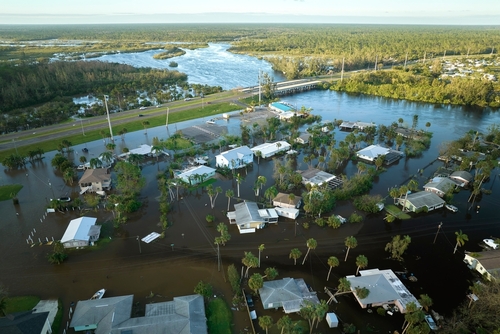 The recent hurricane Ian impacted much of the southeast United States. As a result, it is good to know the general tax rules related to disaster victims. Below, we look at several tax topics for disaster area victims.

