Paycheck Protection Program Flexibility Act of 2020 (HR 7010) – Rep. Dean Phillips (D-MN) introduced this legislation on May 26. This Act modifies provisions related to small business loans issued under the original Paycheck Protection Program. Specifically, the bill permits forgiveness of loans used to pay expenses incurred over a 24-week period, longer than the original eight-week limit, and extends the timeframe to pay off unforgiven loans from two to five years. This bill also increases the limit on non-payroll expenses up to 40 percent when used to pay for rent, utilities, mortgage interest, and similar fixed costs. Loan recipients have until the end of 2020 to rehire employees with full access to payroll tax deferment. The bill was signed into law by the President on June 5.
Providing for Congressional Disapproval Under Chapter 8 of Title 5, United States Code, of the Rule Submitted by the Department of Education Relating to “Borrower Defense Institutional Accountability” (HJ Res 76) – This bill was introduced on Sept. 26, 2019, by Rep. Susie Lee (D-NV). In response to a September 2019 rule issued by the Department of Education (ED), this resolution sought to reverse a process that no longer allows a borrower to be discharged from a student loan if an educational institution misrepresented material facts. The new rule also requires individual borrowers to apply to ED for a defense to repayment, whereas in the past an application could be submitted on behalf of an entire group (e.g. veterans). This resolution passed in both the House and Senate but was vetoed by the President on May 29. No attempt has been made to override the veto.
USA FREEDOM Reauthorization Act of 2020 (HR 6172) – This bill would reauthorize (through November 2023) provisions related to the Foreign Intelligence and Surveillance Act (FISA). Updated provisions mandate that the FBI may not seek detailed phone records on an ongoing basis, cellular or GPS location information, or any evidence in which there is a reasonable expectation of privacy. Other mandates include certifying that the Department of Justice (DOJ) has received any information that might raise doubts about the application, and imposes additional requirements for FISA authorizations that target a U.S. person, federal elected official or candidate. The bill would increase criminal penalties for unlawful violations of FISA electronic surveillance and expands the criteria for when a FISA court decision shall be declassified. The bill was introduced by Rep. Jerrold Nadler (D-NY) on March 10. It was passed in the House in March and in the Senate, with alterations, in May. The bill was recently put on hold during its second pass in the House.
Robert Levinson Hostage Recovery and Hostage-Taking Accountability Act (S 712) – This bill addresses the wrongful detainment of U.S. nationals abroad. It authorizes the President to appoint 1.) a Special Presidential Envoy for Hostage Affairs to engage in U.S. hostage policy recovery efforts; 2.) an interagency Hostage Recovery Fusion Cell to assess and track all cases and coordinate agency efforts to safely recover hostages; 3.) a Hostage Recovery Group to develop, implement and recommend hostage recovery policies. The bill also gives the President the authority to impose visa- and property-blocking sanctions against foreign nationals responsible for or complicit in the unlawful or wrongful detention of a U.S. national abroad. The bill was introduced by Sen. Robert Menendez (D-NJ) on March 7, 2019. It was passed by the Senate on June 15 and is currently with the House.
Stop Senior Scams Act (S 149) – Sponsored by Sen. Robert Casey Jr. (D-PA), this bill establishes a Senior Scams Prevention Advisory Group to develop educational materials to help employees of retailers, financial services companies and wire transfer companies identify and prevent scams that affect seniors. It was introduced on Jan. 16, 2019, and passed in the Senate on June 10. The legislation is currently under consideration in the House.
Carion Doty LLP
Helping Small Business Owners, Seniors and U.S. Hostages, and Limiting Intrusive Domestic Surveillance
July 1, 2020 · Blog, Congress at Work
Paycheck Protection Program Flexibility Act of 2020 (HR 7010) – Rep. Dean Phillips (D-MN) introduced this legislation on May 26. This Act modifies provisions related to small business loans issued under the original Paycheck Protection Program. Specifically, the bill permits forgiveness of loans used to pay expenses incurred over a 24-week period, longer than the original eight-week limit, and extends the timeframe to pay off unforgiven loans from two to five years. This bill also increases the limit on non-payroll expenses up to 40 percent when used to pay for rent, utilities, mortgage interest, and similar fixed costs. Loan recipients have until the end of 2020 to rehire employees with full access to payroll tax deferment. The bill was signed into law by the President on June 5.
Providing for Congressional Disapproval Under Chapter 8 of Title 5, United States Code, of the Rule Submitted by the Department of Education Relating to “Borrower Defense Institutional Accountability” (HJ Res 76) – This bill was introduced on Sept. 26, 2019, by Rep. Susie Lee (D-NV). In response to a September 2019 rule issued by the Department of Education (ED), this resolution sought to reverse a process that no longer allows a borrower to be discharged from a student loan if an educational institution misrepresented material facts. The new rule also requires individual borrowers to apply to ED for a defense to repayment, whereas in the past an application could be submitted on behalf of an entire group (e.g. veterans). This resolution passed in both the House and Senate but was vetoed by the President on May 29. No attempt has been made to override the veto.
USA FREEDOM Reauthorization Act of 2020 (HR 6172) – This bill would reauthorize (through November 2023) provisions related to the Foreign Intelligence and Surveillance Act (FISA). Updated provisions mandate that the FBI may not seek detailed phone records on an ongoing basis, cellular or GPS location information, or any evidence in which there is a reasonable expectation of privacy. Other mandates include certifying that the Department of Justice (DOJ) has received any information that might raise doubts about the application, and imposes additional requirements for FISA authorizations that target a U.S. person, federal elected official or candidate. The bill would increase criminal penalties for unlawful violations of FISA electronic surveillance and expands the criteria for when a FISA court decision shall be declassified. The bill was introduced by Rep. Jerrold Nadler (D-NY) on March 10. It was passed in the House in March and in the Senate, with alterations, in May. The bill was recently put on hold during its second pass in the House.
Robert Levinson Hostage Recovery and Hostage-Taking Accountability Act (S 712) – This bill addresses the wrongful detainment of U.S. nationals abroad. It authorizes the President to appoint 1.) a Special Presidential Envoy for Hostage Affairs to engage in U.S. hostage policy recovery efforts; 2.) an interagency Hostage Recovery Fusion Cell to assess and track all cases and coordinate agency efforts to safely recover hostages; 3.) a Hostage Recovery Group to develop, implement and recommend hostage recovery policies. The bill also gives the President the authority to impose visa- and property-blocking sanctions against foreign nationals responsible for or complicit in the unlawful or wrongful detention of a U.S. national abroad. The bill was introduced by Sen. Robert Menendez (D-NJ) on March 7, 2019. It was passed by the Senate on June 15 and is currently with the House.
Stop Senior Scams Act (S 149) – Sponsored by Sen. Robert Casey Jr. (D-PA), this bill establishes a Senior Scams Prevention Advisory Group to develop educational materials to help employees of retailers, financial services companies and wire transfer companies identify and prevent scams that affect seniors. It was introduced on Jan. 16, 2019, and passed in the Senate on June 10. The legislation is currently under consideration in the House.
Disclaimer
These articles provide general information on tax, accounting, and financial topics for small businesses and individuals. They are educational in nature and are not specific legal, accounting, financial, tax, or other professional advice, and should not be relied upon as such. This content was prepared by Service2Client and may have been reviewed or edited by the website owner for accuracy and compliance. Look for a trust mark below for verification details. No representation is made that any approach described will achieve a particular result, and no regulatory or professional body has reviewed or endorsed this content. Because each situation is different, readers should consult a qualified professional about their specific circumstances before acting. Images accompanying these articles are protected by copyright and may not be copied or reused.
To provide the best experiences, we use technologies like cookies to store and/or access device information. Consenting to these technologies will allow us to process data such as browsing behavior or unique IDs on this site. Not consenting or withdrawing consent, may adversely affect certain features and functions.
Functional
Always active
The technical storage or access is strictly necessary for the legitimate purpose of enabling the use of a specific service explicitly requested by the subscriber or user, or for the sole purpose of carrying out the transmission of a communication over an electronic communications network.
Preferences
The technical storage or access is necessary for the legitimate purpose of storing preferences that are not requested by the subscriber or user.
Statistics
The technical storage or access that is used exclusively for statistical purposes.The technical storage or access that is used exclusively for anonymous statistical purposes. Without a subpoena, voluntary compliance on the part of your Internet Service Provider, or additional records from a third party, information stored or retrieved for this purpose alone cannot usually be used to identify you.
Marketing
The technical storage or access is required to create user profiles to send advertising, or to track the user on a website or across several websites for similar marketing purposes.
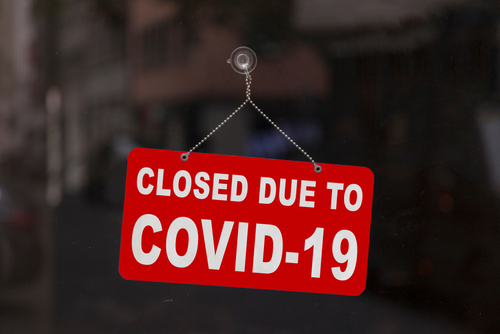 Paycheck Protection Program Flexibility Act of 2020 (HR 7010) – Rep. Dean Phillips (D-MN) introduced this legislation on May 26. This Act modifies provisions related to small business loans issued under the original Paycheck Protection Program. Specifically, the bill permits forgiveness of loans used to pay expenses incurred over a 24-week period, longer than the original eight-week limit, and extends the timeframe to pay off unforgiven loans from two to five years. This bill also increases the limit on non-payroll expenses up to 40 percent when used to pay for rent, utilities, mortgage interest, and similar fixed costs. Loan recipients have until the end of 2020 to rehire employees with full access to payroll tax deferment. The bill was signed into law by the President on June 5.

