As 2025 unfolds, U.S. tax policy is poised for significant shifts, particularly with a new Republican administration under President Donald Trump. The year ahead will likely see a range of tax reforms, largely driven by the GOP’s objectives and campaign promises. In this article, we’ll explore the major tax policy trends, legislative developments, and administration changes that may shape U.S. tax law in 2025.
The Impact of Supreme Court Decisions
2024 also saw two major Supreme Court decisions with significant tax implications. In the Moore case, the Court ruled narrowly on the issue of wealth taxation, leaving open the possibility of revisiting the question in the future. While wealth tax proposals had gained some traction among Democrats, the Court’s decision, combined with the political climate, suggests that such proposals are unlikely to gain much momentum under the new administration.
The Loper Bright decision, which questioned the deference given to government regulations, could have far-reaching effects on tax policy. The ruling makes it more difficult for agencies like the IRS to issue regulations without clear legislative guidance, potentially leading to more legal challenges to IRS regulations and shifting the balance of power between lawmakers and regulatory agencies.
2025: A New Republican Agenda
With a Republican administration taking office in 2025, tax policy is expected to shift dramatically. President Trump, along with a Republican-controlled Senate and House, will likely push for several key changes to tax law.
One of the primary objectives will be to extend provisions of the 2017 Tax Cuts and Jobs Act (TCJA) that are set to expire. This includes individual tax cuts, corporate rate reductions and changes to the state and local tax (SALT) deduction cap. The extension of other expiring provisions involving lifetime gift and estate tax exemptions, AMT, child tax credits, and the mortgage interest deduction may also be on the table. Additionally, the GOP is expected to explore new tax cuts, with some lawmakers proposing measures like eliminating taxes on tips, which was promoted during Trump’s election campaign.
On the corporate side, there may be discussions about lowering the effective tax rate through credits and incentives rather than direct reductions to the statutory corporate tax rate. There also could be movement on tax expensing for research and development, as well as other measures to incentivize business investment.
Potential Revenue-Raising Measures
Despite the tax cuts expected to dominate the agenda, there may be some revenue-raising measures included in the GOP’s tax proposals. The focus on reducing deficits could lead to efforts to cut some of the green credits in the Inflation Reduction Act, although these cuts are unlikely to raise significant revenue. There also may be attempts to tighten international tax rules from the TCJA to generate more revenue.
President Trump has also proposed replacing individual income taxes with increases in tariffs, implementing a universal 20 percent tariff across the board, and implementing an additional 50 percent tariff on imports from China.
IRS Funding and Administration Changes
Under the new administration, the IRS is expected to face significant cuts, particularly in its enforcement budget. The $80 billion allocated to the agency in recent years, which was intended to improve taxpayer services and combat tax evasion, is likely to be rolled back. Republicans have expressed strong opposition to the IRS’ expanded powers and are expected to push for a reallocation of those funds toward customer service rather than enforcement.
Additionally, the new administration may replace current IRS Commissioner Daniel Werfel, who was appointed during the Biden administration. Trump could nominate a new commissioner, and if this happens, it could spark further debates over the direction of the IRS in the coming years.
Conclusion
2025 promises to be a dynamic year for U.S. tax policy, with significant changes expected under the new administration. Key issues to watch include the fate of the TCJA’s expiring provisions, potential new tax cuts, and ongoing debates over IRS funding and regulations. As the administration works to implement its agenda, there will likely be contentious discussions and compromises on Capitol Hill, setting the stage for a new era of tax policy for the United States.
Carion Doty LLP
2025 U.S. Tax Legislation Forecast: What to Expect
February 1, 2025 · Blog, Tax and Financial News
As 2025 unfolds, U.S. tax policy is poised for significant shifts, particularly with a new Republican administration under President Donald Trump. The year ahead will likely see a range of tax reforms, largely driven by the GOP’s objectives and campaign promises. In this article, we’ll explore the major tax policy trends, legislative developments, and administration changes that may shape U.S. tax law in 2025.
The Impact of Supreme Court Decisions
2024 also saw two major Supreme Court decisions with significant tax implications. In the Moore case, the Court ruled narrowly on the issue of wealth taxation, leaving open the possibility of revisiting the question in the future. While wealth tax proposals had gained some traction among Democrats, the Court’s decision, combined with the political climate, suggests that such proposals are unlikely to gain much momentum under the new administration.
The Loper Bright decision, which questioned the deference given to government regulations, could have far-reaching effects on tax policy. The ruling makes it more difficult for agencies like the IRS to issue regulations without clear legislative guidance, potentially leading to more legal challenges to IRS regulations and shifting the balance of power between lawmakers and regulatory agencies.
2025: A New Republican Agenda
With a Republican administration taking office in 2025, tax policy is expected to shift dramatically. President Trump, along with a Republican-controlled Senate and House, will likely push for several key changes to tax law.
One of the primary objectives will be to extend provisions of the 2017 Tax Cuts and Jobs Act (TCJA) that are set to expire. This includes individual tax cuts, corporate rate reductions and changes to the state and local tax (SALT) deduction cap. The extension of other expiring provisions involving lifetime gift and estate tax exemptions, AMT, child tax credits, and the mortgage interest deduction may also be on the table. Additionally, the GOP is expected to explore new tax cuts, with some lawmakers proposing measures like eliminating taxes on tips, which was promoted during Trump’s election campaign.
On the corporate side, there may be discussions about lowering the effective tax rate through credits and incentives rather than direct reductions to the statutory corporate tax rate. There also could be movement on tax expensing for research and development, as well as other measures to incentivize business investment.
Potential Revenue-Raising Measures
Despite the tax cuts expected to dominate the agenda, there may be some revenue-raising measures included in the GOP’s tax proposals. The focus on reducing deficits could lead to efforts to cut some of the green credits in the Inflation Reduction Act, although these cuts are unlikely to raise significant revenue. There also may be attempts to tighten international tax rules from the TCJA to generate more revenue.
President Trump has also proposed replacing individual income taxes with increases in tariffs, implementing a universal 20 percent tariff across the board, and implementing an additional 50 percent tariff on imports from China.
IRS Funding and Administration Changes
Under the new administration, the IRS is expected to face significant cuts, particularly in its enforcement budget. The $80 billion allocated to the agency in recent years, which was intended to improve taxpayer services and combat tax evasion, is likely to be rolled back. Republicans have expressed strong opposition to the IRS’ expanded powers and are expected to push for a reallocation of those funds toward customer service rather than enforcement.
Additionally, the new administration may replace current IRS Commissioner Daniel Werfel, who was appointed during the Biden administration. Trump could nominate a new commissioner, and if this happens, it could spark further debates over the direction of the IRS in the coming years.
Conclusion
2025 promises to be a dynamic year for U.S. tax policy, with significant changes expected under the new administration. Key issues to watch include the fate of the TCJA’s expiring provisions, potential new tax cuts, and ongoing debates over IRS funding and regulations. As the administration works to implement its agenda, there will likely be contentious discussions and compromises on Capitol Hill, setting the stage for a new era of tax policy for the United States.
Disclaimer
These articles provide general information on tax, accounting, and financial topics for small businesses and individuals. They are educational in nature and are not specific legal, accounting, financial, tax, or other professional advice, and should not be relied upon as such. This content was prepared by Service2Client and may have been reviewed or edited by the website owner for accuracy and compliance. Look for a trust mark below for verification details. No representation is made that any approach described will achieve a particular result, and no regulatory or professional body has reviewed or endorsed this content. Because each situation is different, readers should consult a qualified professional about their specific circumstances before acting. Images accompanying these articles are protected by copyright and may not be copied or reused.
To provide the best experiences, we use technologies like cookies to store and/or access device information. Consenting to these technologies will allow us to process data such as browsing behavior or unique IDs on this site. Not consenting or withdrawing consent, may adversely affect certain features and functions.
Functional
Always active
The technical storage or access is strictly necessary for the legitimate purpose of enabling the use of a specific service explicitly requested by the subscriber or user, or for the sole purpose of carrying out the transmission of a communication over an electronic communications network.
Preferences
The technical storage or access is necessary for the legitimate purpose of storing preferences that are not requested by the subscriber or user.
Statistics
The technical storage or access that is used exclusively for statistical purposes.The technical storage or access that is used exclusively for anonymous statistical purposes. Without a subpoena, voluntary compliance on the part of your Internet Service Provider, or additional records from a third party, information stored or retrieved for this purpose alone cannot usually be used to identify you.
Marketing
The technical storage or access is required to create user profiles to send advertising, or to track the user on a website or across several websites for similar marketing purposes.
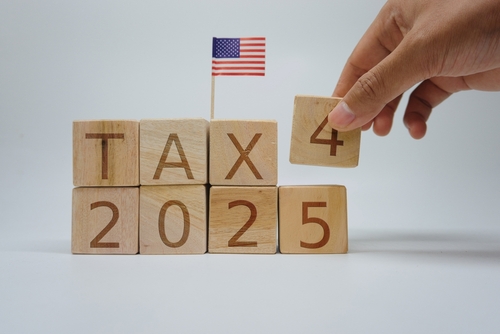 As 2025 unfolds, U.S. tax policy is poised for significant shifts, particularly with a new Republican administration under President Donald Trump. The year ahead will likely see a range of tax reforms, largely driven by the GOP’s objectives and campaign promises. In this article, we’ll explore the major tax policy trends, legislative developments, and administration changes that may shape U.S. tax law in 2025.

